
.jpg&blockId=30dc3934-20bc-804b-87e9-e9db6a3fd2da&width=3600)

.png&blockId=313c3934-20bc-8064-b0ca-da4bcf48386d)
AI-Driven Production Scheduling for Complex Manufacturing Systems
Abstract
Production scheduling is a core decision-making problem in manufacturing systems, directly affecting productivity, delivery performance, and system robustness. Modern manufacturing environments are increasingly characterized by high product variety, complex resource constraints, and frequent operational disturbances, making traditional static or rule-based scheduling approaches insufficient for real-world deployment. Recent advances in AI have opened new opportunities for production scheduling in complex manufacturing systems. This invited talk introduces recent AI-driven scheduling approaches through representative industrial case studies across multiple domains, including semiconductor and display manufacturing. These examples highlight how learning-based and data-driven methods can improve decision-making under practical constraints and operational disturbances. Beyond individual applications, the talk discusses the need for generalized and transferable scheduling methodologies that can support future manufacturing environments with high uncertainty and rapid changes. We conclude by outlining key research directions toward scalable, robust, and deployable AI-driven scheduling frameworks for next-generation manufacturing operations.
Biography
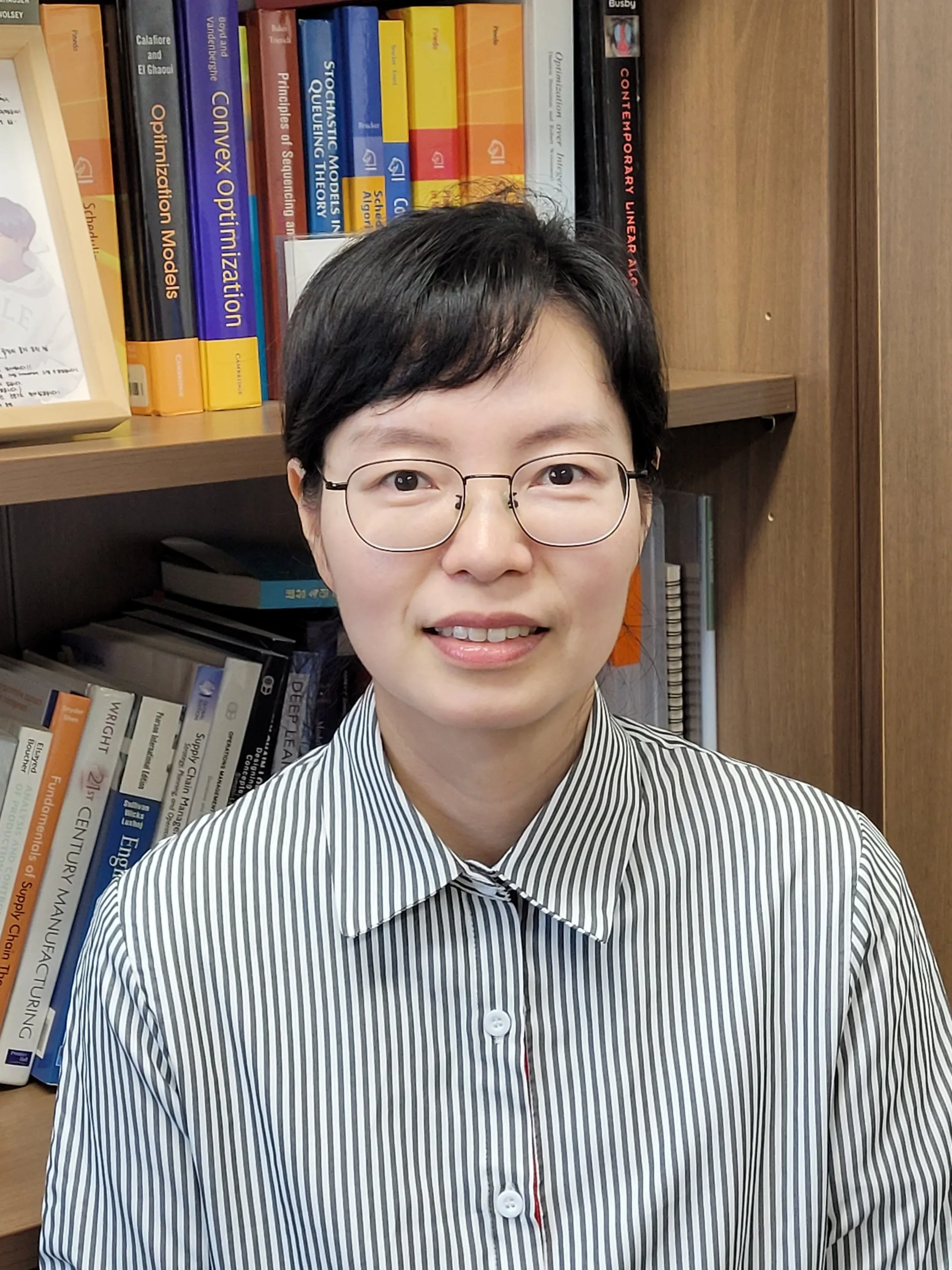
Hyun-Jung Kim is an Associate Professor in the Department of Industrial & Systems Engineering at KAIST (Korea Advanced Institute of Science and Technology), where she leads the Manufacturing & Service Systems Lab. Her research focuses on production scheduling and operational optimization for complex manufacturing systems, with an emphasis on AI-driven decision-making, reinforcement learning, and mathematical optimization. She has conducted extensive research on real-world industrial applications across a wide range of domains, including semiconductor and display manufacturing, steel production, heavy industry, home appliances, and tire manufacturing, with the goal of bridging methodological advances and practical deployment. Her current work further explores generalized and transferable scheduling frameworks that can operate reliably under uncertainty and disruptions, supporting next-generation autonomous manufacturing operations. She has received several prestigious awards, including the Young Investigator Award from the Korean Institute of Industrial Engineers, the Best Semiconductor Manufacturing Automation Paper in Theory Award from the IEEE RAS Technical Committee on Semiconductor Manufacturing Automation, and the IEEE Transactions on Semiconductor Manufacturing Best Paper Award (Honorable Mention). She serves as a Senior Editor of IEEE Transactions on Automation Science and Engineering and as an Associate Editor for several journals, including the International Journal of Production Research, Naval Research Logistics, and the Journal of Scheduling. More details are available at msslab.kaist.ac.kr.
Smart Maritime and Port Logistics: Data-Driven Optimization and AI-Enabled Innovation
Abstract
Global trade continues to increase, and currently nearly 85% of the world’s cargo is transported by sea. This reality places ports at the center of the global supply chain, serving as critical interfaces between maritime transport and inland logistics systems. Ensuring the smooth, reliable movement of goods, therefore, depends heavily on the efficiency of both shipping services and port operations. For countries like South Korea, where exports and imports represent a significant share of the national economy, the performance of maritime and port logistics is essential. Traditionally, efforts to enhance port performance have focused on operational optimization. While these approaches remain important, there has been a noticeable shift in recent years toward data-driven decision-making. At the same time, safety and environmental considerations in maritime logistics are no longer secondary concerns; they have become integral to supply chain optimization. Rapid advances in artificial intelligence are further reshaping the landscape, opening up possibilities beyond conventional optimization frameworks. In this presentation, projects carried out in South Korea will be discussed, and practical approaches to building smarter maritime and port logistics systems will be presented. Emerging technologies—including generative AI and large language models (LLMs)—will also be examined for how they can support more intelligent, adaptive, and sustainable shipping and port operations.
Biography
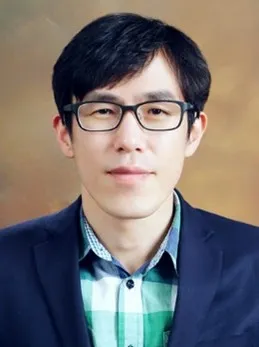
Dr. Hyerim Bae is currently Dean of the Graduate School of Data Science at Pusan National University (PNU) in South Korea and a Professor in the Department of Industrial Engineering at the same university. He also serves as Director of the Human-Centered Carbon Neutral Global Supply Chain Research Center, a multi-year initiative supported by the National Research Foundation of Korea. His work explores the convergence of artificial intelligence, big data analytics, and sustainable logistics, with a particular focus on smart ports and digital supply chains. With a career spanning both academia and industry, Dr. Bae has been deeply involved in the advancement of intelligent logistics systems. He has published over 140 journal articles and more than 200 conference papers, including numerous works in top-tier international journals such as IEEE Transactions on Pattern Analysis and Machine Intelligence, Advanced Engineering Informatics, IEEE Transactions on Services Computing, IEEE Transactions on Knowledge and Data Engineering, Information Sciences, Neurocomputing, Pattern Recognition, International Journal of Production Research, Journal of Industrial Ecology, Expert Systems with Applications, and many more. His research contributions range from process analytics and time-series prediction models to port simulation systems and collaborative learning frameworks for maritime environments. He serves as an associate editor for the International Journal of Innovative Computing, Information, and Control, and for IEEE Transactions on Big Data. Dr. Bae has led a number of nationally funded research projects, including the development of the Meta K-Port platform, an intelligent logistics system for smart ports; a big data-based logistics optimization project funded by the Ministry of Oceans and Fisheries; and earlier work on IoT infrastructure for port automation. These projects reflect his consistent efforts to bridge cutting-edge research with real-world applications that enhance the efficiency and sustainability of logistics and transportation networks. In addition to his academic and research roles, Dr. Bae is active in industry as the CEO of SmartChain Co., Ltd., where he has overseen the development of technologies such as digital twins for port operations, AI-based logistics monitoring tools, and large language model applications for port logistics. His work frequently crosses disciplinary boundaries, integrating techniques from computer science, industrial engineering, and environmental systems. Dr. Bae has also contributed to national policy as a member of the Presidential Advisory Council on Science & Technology, offering expert insight into Korea’s science and innovation strategies. Through his leadership, he continues to support the growth of data science talent and promote research that aligns with global goals for carbon neutrality and digital transformation in logistics.
An Intelligent Virtual Power Plant Platform Powered by Optimization and AI
Abstract
The global energy sector is undergoing a rapid transition toward renewable energy. Traditional energy market structures are being reformed, and a wide range of new business models are emerging. The Virtual Power Plant (VPP) has attracted significant attention as a representative business model in modern electricity markets. A VPP is a cloud-based information technology platform that aggregates heterogeneous distributed energy resources (DERs) and coordinates their operation to function as a single, virtualized power plant. By integrating numerous small-scale DERs, VPPs can effectively mitigate their inherent challenges such as intermittency and non-dispatchability, thereby enhancing the reliability and operational flexibility of power system. The core competitiveness of VPP businesses lies in their data analytics capabilities and advanced operational technologies. Consequently, some researchers in the Operations Research and Management Science (OR/MS) community have considered the VPP-related problems. In this talk, I will present a series of real-world VPP operational challenges addressed by my research group through an eight-year collaboration with a VPP company in South Korea. The talk highlights how these challenges were systematically formulated and solved using optimization and AI techniques. Finally, I will share my perspective on the evolving role of industrial engineering in shaping the future of the energy industry.
Biography
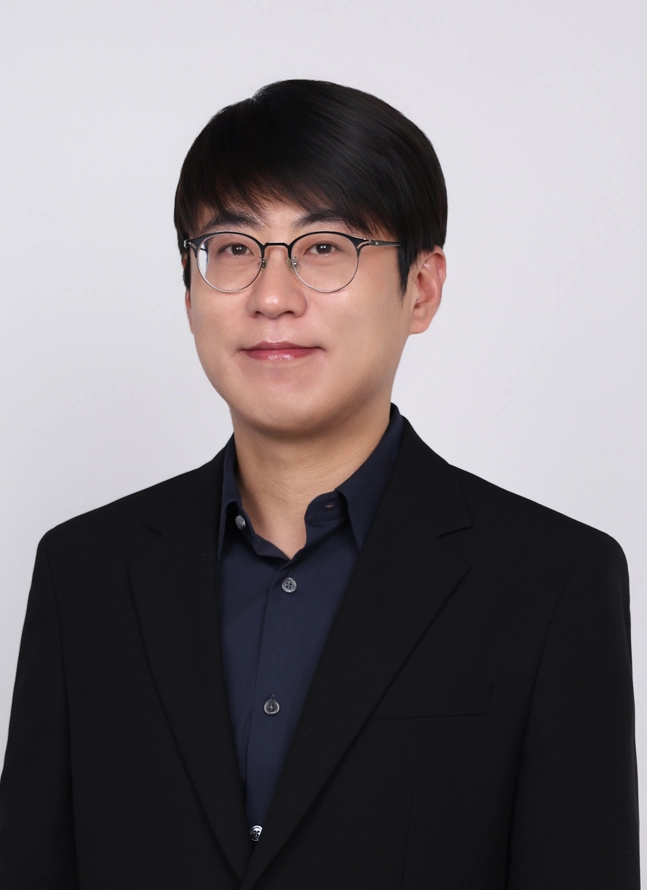
Dr. Dong Gu Choi is an Associate Professor in the Department of Industrial and Management Engineering at Pohang University of Science and Technology (POSTECH), South Korea. Prior to joining POSTECH in 2016, he was a senior researcher at the Korea Institute of Energy Research. His research interests include stochastic and robust optimization, game theory, reinforcement learning, multi-agent learning, and applications in energy and environmental systems.
Dong Gu Choi received B.S. in industrial engineering from KAIST, South Korea, and an M.S. in Operations Research and a Ph.D. in industrial engineering from Georgia Institute of Technology, U.S.A.
AI-Driven Anomaly Detection in Process Monitoring: From Rule-Based to Deep Learning
Abstract
Process monitoring plays a crucial role in various manufacturing and service industries. Control charts have been widely used for this purpose because they provide a visual representation of process performance, making interpretation straightforward. As a result, engineers without a statistical background can easily understand them. However, control charts have limitations because they rely on certain statistical assumptions, making them less effective in handling complex situations commonly found in modern manufacturing processes. Recently, AI-based techniques have gained popularity in process monitoring, often under the term "anomaly detection." In this talk, I will discuss the evolution of process monitoring, from traditional monitoring methods to the latest deep learning-based approaches.
Biography
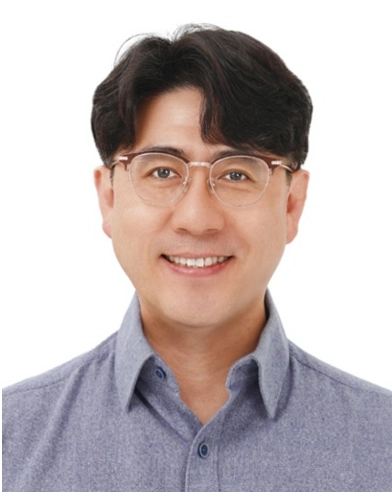
Seoung Bum Kim is a Professor in the School of Industrial and Management Engineering at Korea University. From 2005-2009, he was a professor in the Department of Industrial & Manufacturing Systems Engineering at the University of Texas at Arlington. He received his B.S. degree from Hanyang University and his M.S. and Ph.D. degrees in Industrial and Systems Engineering from the Georgia Institute of Technology. He serves as the president of the Korea Data Mining Society, the director of the Center for Artificial Intelligence Engineering, the director of the Center for Industry-Academia Cooperation, and the director of the BK21 FOUR program at Korea University. His main research interests include using artificial intelligence and machine learning to discover hidden patterns in data and applying them to solve problems in various fields including process improvement, quality control, demand forecasting, supply chain optimization, and customer behavior analysis. Professor Kim has published more than 300 internationally recognized journals and refereed conference proceedings. He has supervised 36 Ph.D. and 63 M.S. students. He has received the best teaching award 27 times at Korea University, the highest number awarded to any faculty member in university’s history.